

Carpal Tunnel Syndrome

Carpal Tunnel Syndrome
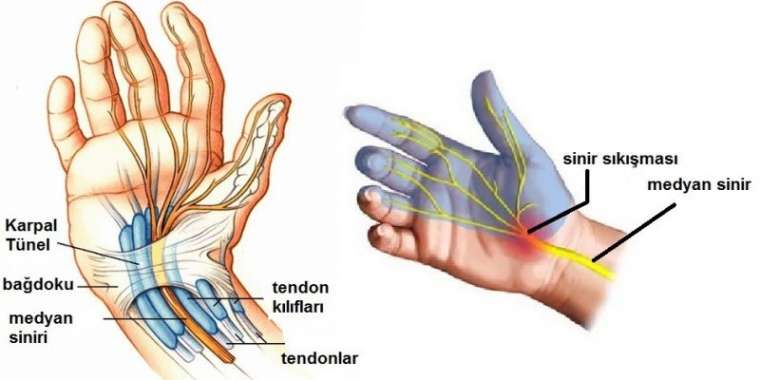
Carpal Tunnel Syndrome (CTS) is a progressive condition that affects the first three fingers of one or both hands. It manifests as pain, numbness, and weakness due to compression of the median nerve, which is located in the middle of the wrist and extends to the first three fingers.
Causes of Carpal Tunnel Syndrome
Individuals with structurally narrow wrist canals are more prone to developing clinical symptoms. It can occur more frequently in obese individuals, those who consume alcohol, those with diabetes, and those with vascular disease. Carpal tunnel syndrome is caused by increased pressure within the canal. This pressure depends on the position of the hand.
Mechanical factors in the workplace play a role in most cases. Frequent repetition of certain movements is associated with carpal tunnel syndrome.
Risk Factors:
- Carpenters and handicraftsmen
- Tennis players
- Those who frequently wash dishes by hand
- Drivers
- Those who engage in repetitive wrist movements
- During pregnancy (temporary condition)
Carpal Tunnel Syndrome Symptoms
Patients often wake up a few hours after falling asleep with a feeling of swelling, numbness, and tingling throughout their entire hand. The fingers are stiff, and the patient feels swollen and tense, but no objective change is actually observed.
Patients shake and rub their hands, often getting out of bed, and soon feel relief. Numbness sometimes recurs multiple times a night, causing severe sleep disturbance.
- Hand numbness that wakes you up at night
- Swelling and feeling of tension in the hand
- Finger stiffness
- Numbness spreads to the forearms, shoulders, and neck
- Increased complaints after housework
- Loss of strength in the future
- Palm muscle wasting
Diagnosis of Carpal Tunnel Syndrome
A definitive diagnosis can be made with an EMG test.
Carpal Tunnel Syndrome Treatment
Conservative Treatment
We find that night rest wristbands that keep the wrist in a neutral position but allow the fingers to be free are very useful in patients with advanced sensory and no motor impairment.
After hydrocortisone injection into the carpal tunnel, symptoms typically resolve for a long time. While low-dose oral cortisone therapy has been reported to yield good results, no subsequent results have been reported.
Surgical Treatment
Patients whose symptoms persist with medication should undergo surgery without delay, meaning before nerve damage worsens. Surgery will relieve pressure on the nerve, stopping further progression of the damage.
Surgical Features:
- No hospitalization required
- Outpatient treatment is applied
- It is performed with local anesthesia.
- Pressure on the nerve is eliminated