
Piriformis Syndrome
Piriformis Syndrome
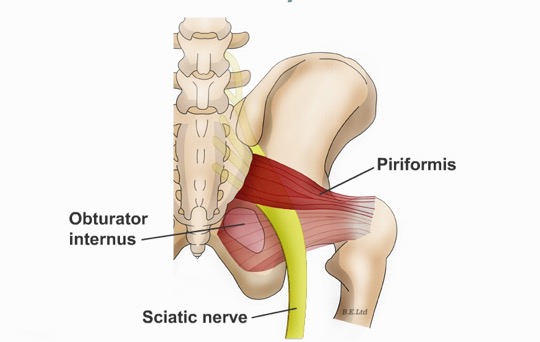
Piriformis syndrome is a rare condition caused by the piriformis muscle in the buttocks pressing on the nearby sciatic nerve. It manifests as pain in the buttocks and legs.
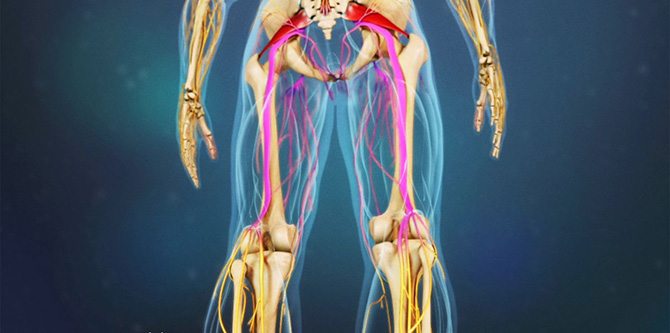
The piriformis is a flat muscle located in the buttocks. It originates in the lower spine and attaches to the upper surfaces of each thighbone. It stabilizes the hip and helps with walking by allowing the hip to move from side to side. A spasm in this muscle can compress the sciatic nerve, causing numbness, tingling, and pain in the buttocks, thighs, and legs on the side of the compressed sciatic nerve.
Because it exhibits similar symptoms to certain conditions, such as a herniated disc, it can be confused by the patient. It can appear suddenly or develop gradually over time. It is six times more common in women than in men because the quadriceps femoris muscle in the pelvis has a wider angle in women than in men.
Types of Piriformis Syndrome
Causes of Piriformis Syndrome
Injuries
Events such as traffic accidents, injuries that cause bleeding in the muscle, falls, sudden twisting of the hip, and trauma can cause piriformis damage.
Life style
The piriformis muscle can be damaged by excessive exercise, but it can also be damaged by prolonged inactivity. Inactivity, sitting for long periods, especially on hard surfaces, a shift in the center of gravity due to weight gain during pregnancy, excessive exercise, running, repetitive leg movements, and lifting heavy objects are among the causes.
Anatomical Disorders
A difference in the length of the legs, spinal curvature (scoliosis), previous hip surgery, a tumor in the hip area, or a ballooning of a blood vessel (aneurysm) can also cause piriformis damage.
Piriformis Syndrome Symptoms
- Pain that increases with sitting, standing, or lying for more than 15-20 minutes
- Numbness and tingling sensation radiating from the coccyx to the buttocks and back of the leg
- Pain that improves with movement and increases with rest
- Pain when rising from a sitting or squatting position
- Weakness in the legs
- Difficulty sitting
- Difficulty walking, staggering
- Pain when getting out of bed
- Weakness in the legs due to muscle loss in later periods
- In some cases, abdominal, hip and groin pain and pain during sexual intercourse in women
Piriformis Syndrome Treatment
Early, nonsurgical treatment for piriformis syndrome is highly effective. This includes activities designed to reduce muscle tension and spasms in daily life, hip strengthening exercises, physical therapy, and medication.
Conservative Treatment
Activities to reduce muscle tension, hip strengthening exercises and physical therapy methods are applied.
Injection Therapy
In some cases, an injection may be administered to help reduce spasm and pain, allowing the muscle to relax and reduce pressure on the sciatic nerve.
Surgical Treatment
If this treatment fails, surgery should be considered as a last resort. Surgery reduces pressure on the sciatic nerve.